

The right dining table shape for your home: advantages, disadvantages, and seating capacity
The Dining table is the incomparable centerpiece of the family. It brings friends together and often fulfills the role of a meeting point for game nights and interesting encounters in addition to its function as a dining table. The shape of the dining table plays a rather subordinate role, yet the dining table should match you, your needs, and the rest of the furnishings.
But which table shape best suits your needs and your space? At this point, we provide you with an overview of the most common shapes of dining tables – with their advantages, disadvantages, and the number of people that can fit at different sizes.
Round dining table
A round dining table stands for communication and closeness. With its shape, all individuals sit equally and closely together, making it ideal for conversations and social gatherings. Whether in smaller kitchens or as a highlight in the dining room – a round table creates an inviting atmosphere.
Its soft contours make it appear harmonious, and without corners, it offers safety and comfort, especially in households with children. Round tables fit in rooms of any size: while smaller diameters are perfect for 2 to 4 people, larger models can accommodate up to 10 people.
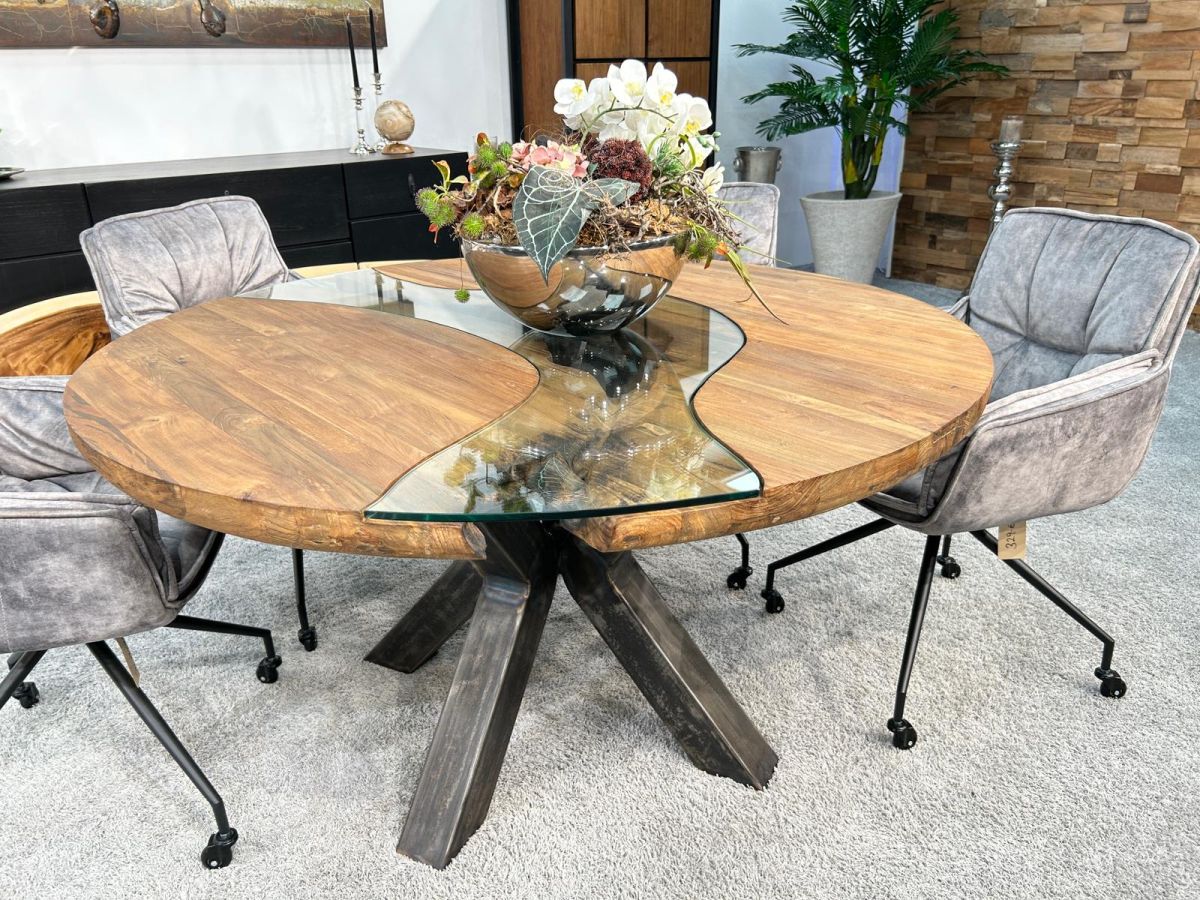
Advantages of a round dining table:
- Promotes communication, as all individuals can look directly at each other.
- No corners – ideal for households with small children.
- Fits well in smaller rooms or areas where the table can stand freely.
- Appears visually harmonious and invites you to linger.
Disadvantages of the round dining table:
- Offers less space for individuals compared to rectangular or oval tables of the same size.
- Requires a lot of space with larger diameters, as all seating is distributed around the entire area.
Seating capacity (approx. 60 – 70 cm per person):
- Diameter 100 cm: Space for 4 people.
- Diameter 150 cm: Space for 6 people.
- Diameter 180 cm: Space for 8–10 people.
Square dining table
A square dining table is the classic among dining table shapes and impresses with its versatility. It fits perfectly in rectangular rooms and offers plenty of space for family and guests. Whether as a compact version for 4 people or as a large table for up to 12 people– a rectangular dining table is the optimal choice for various needs.
Its clearly structured shape creates an orderly spatial effect, and the straight edge allows for several chairs to be comfortably placed.
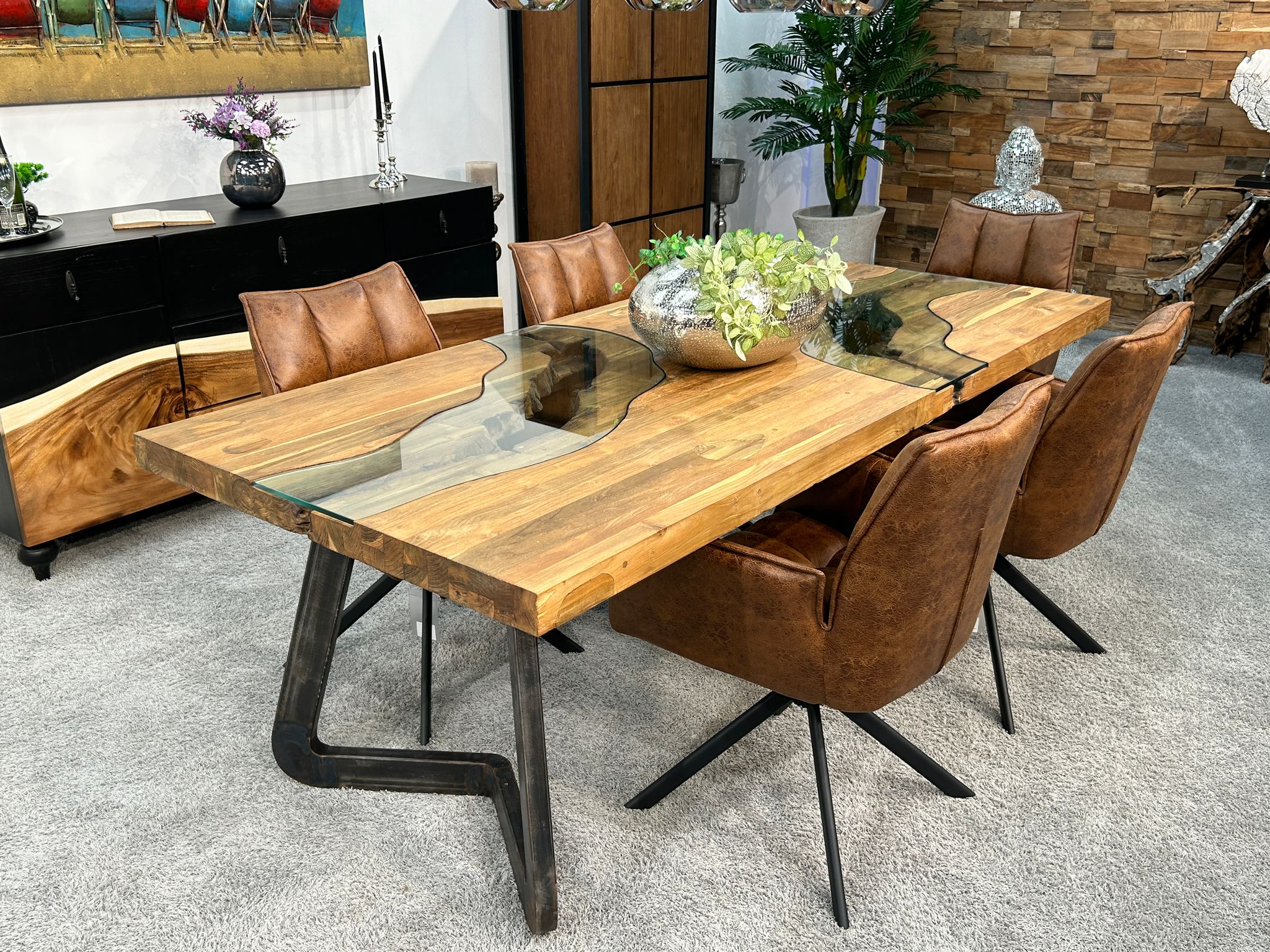
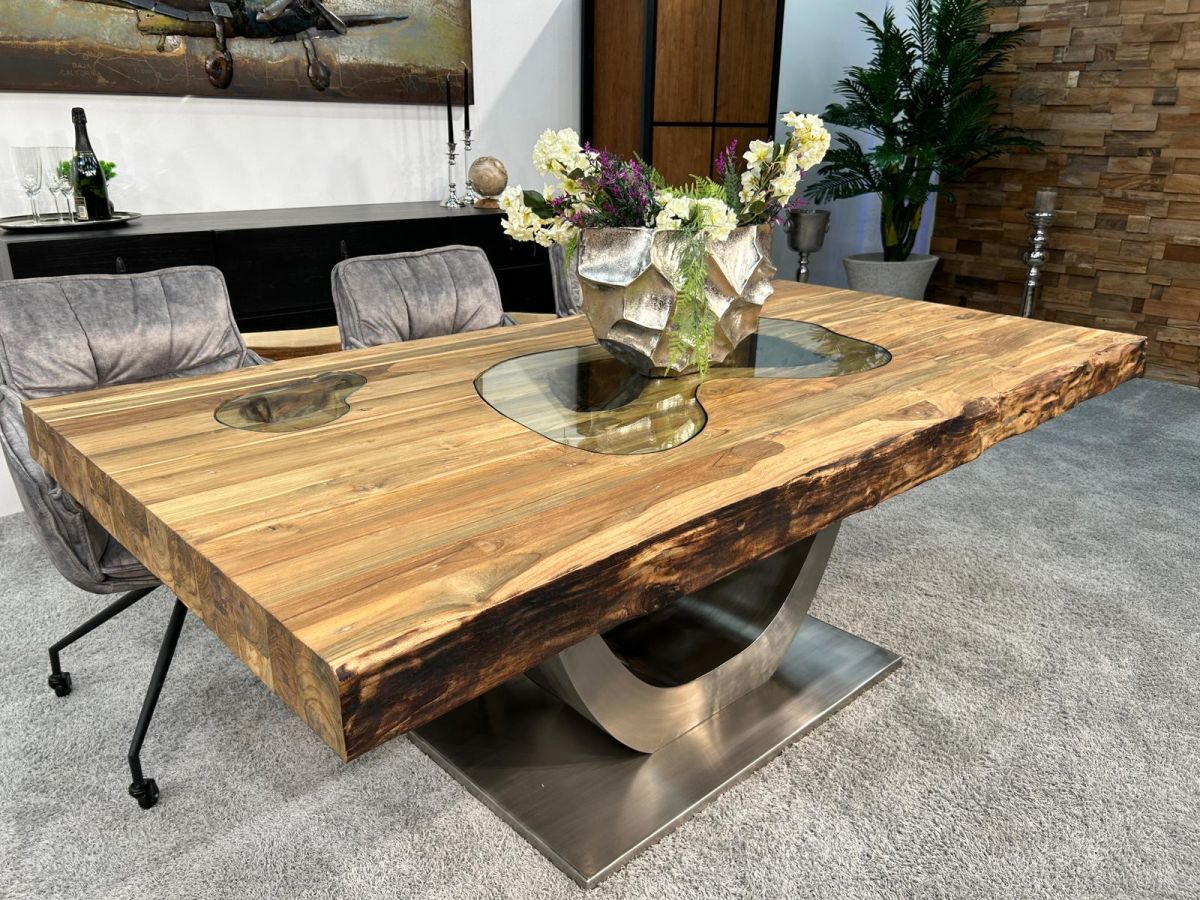
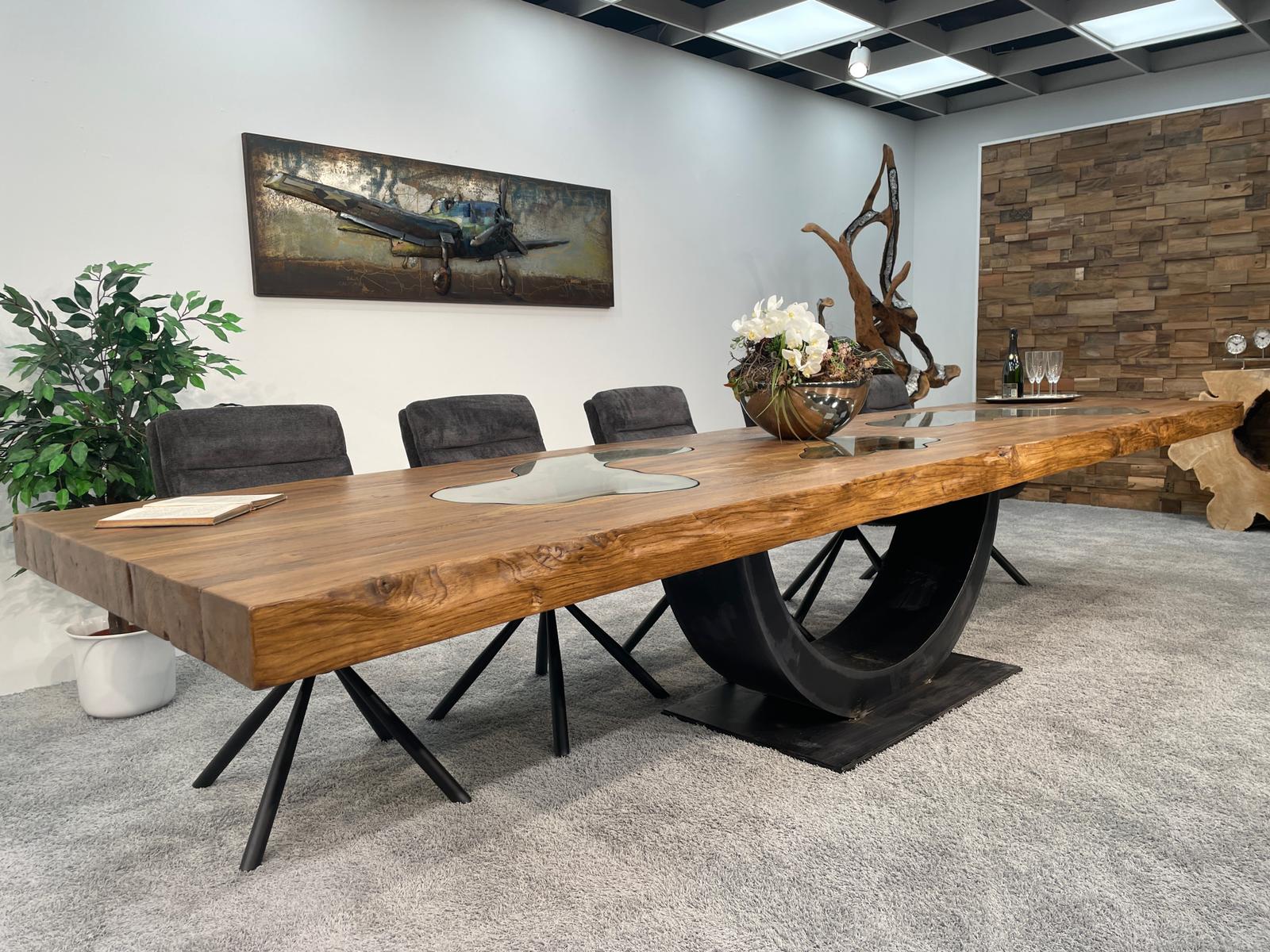
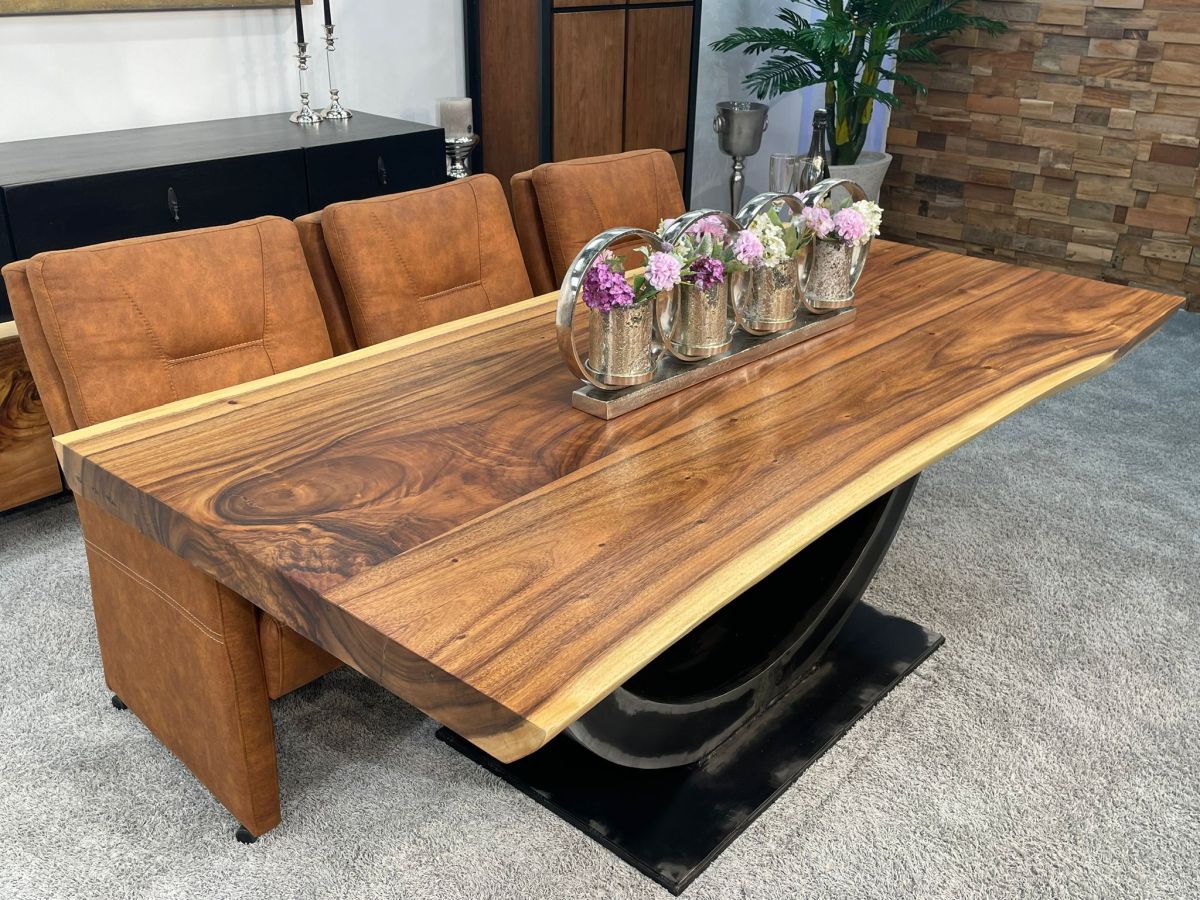
Advantages:
- Perfect for rectangular rooms, as the space is optimally utilized.
- Offers plenty of table space and is excellent for larger groups.
- Expandable models are often available.
- Flexible in placement, e.g., against a wall or in the middle of the room.
Disadvantages:
- The corners can appear bulky in small rooms.
- Guests at the corners have less legroom.
Seating capacity (approx. 60 – 70 cm per person):
- 160 x 90 cm: Space for 6 people.
- 200 x 100 cm: Space for 8 people.
- 300 x 110 cm: Space for up to 12 people.
Oval dining table
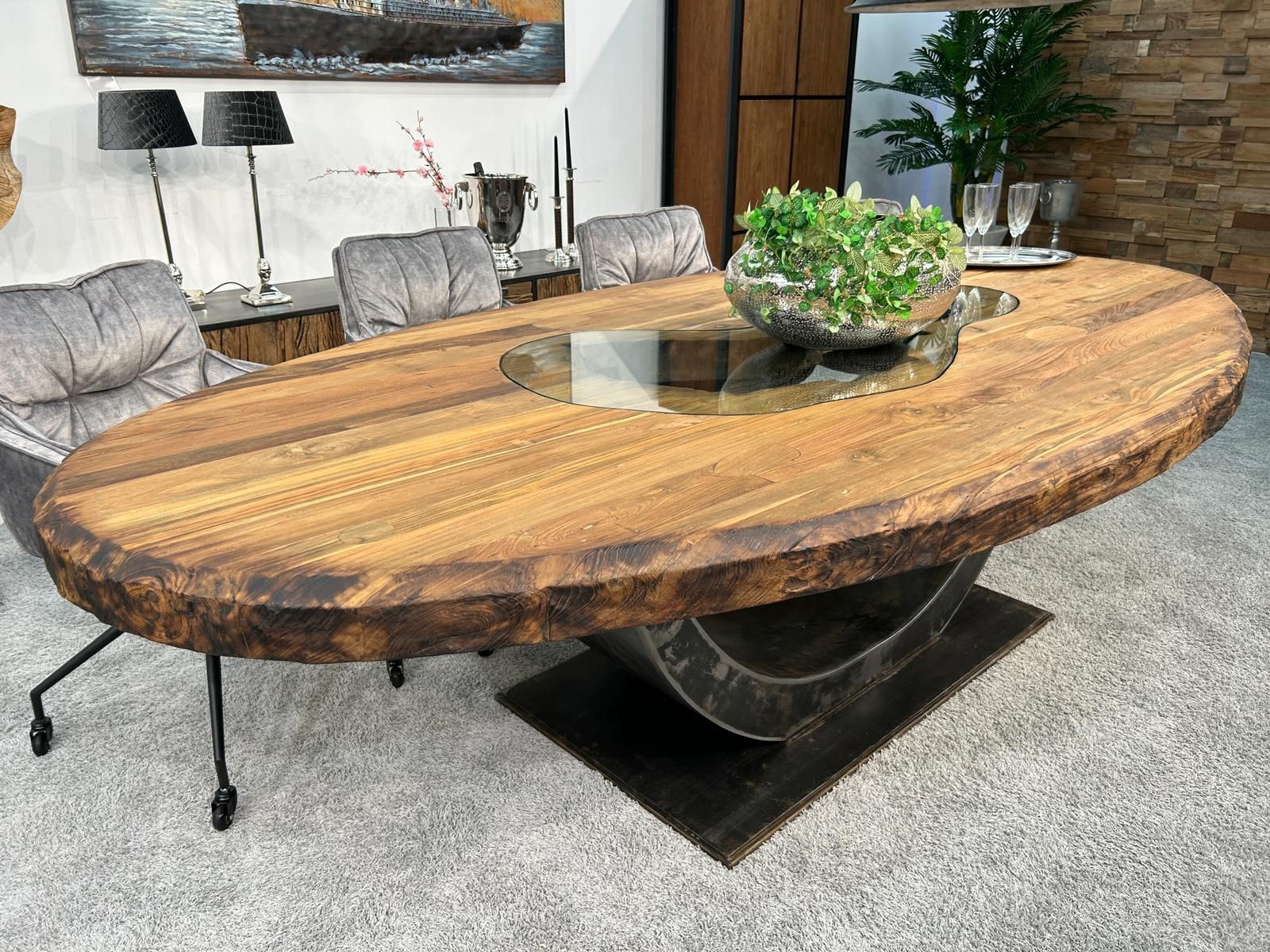
An oval Dining table combines the best features of round and rectangular tables. Its curved shape creates a harmonious atmosphere while still providing plenty of space for guests. Without sharp corners, an oval table appears less bulky and fits particularly well into medium to large rooms.
Thanks to its length, it is ideally suited for 6 to 12 people, depending on size. The rounded edges facilitate movement around the table and make it a family-friendly option.
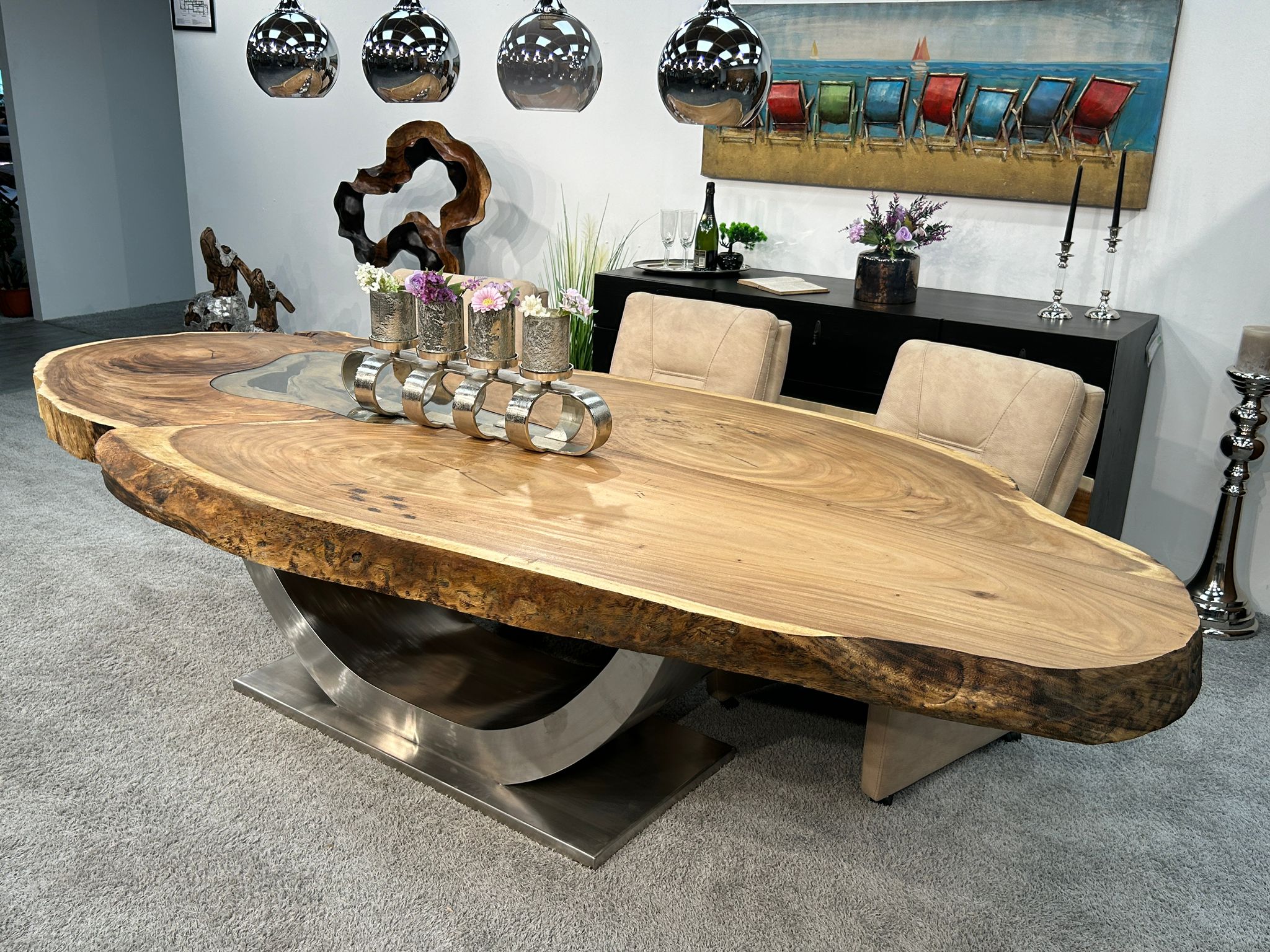
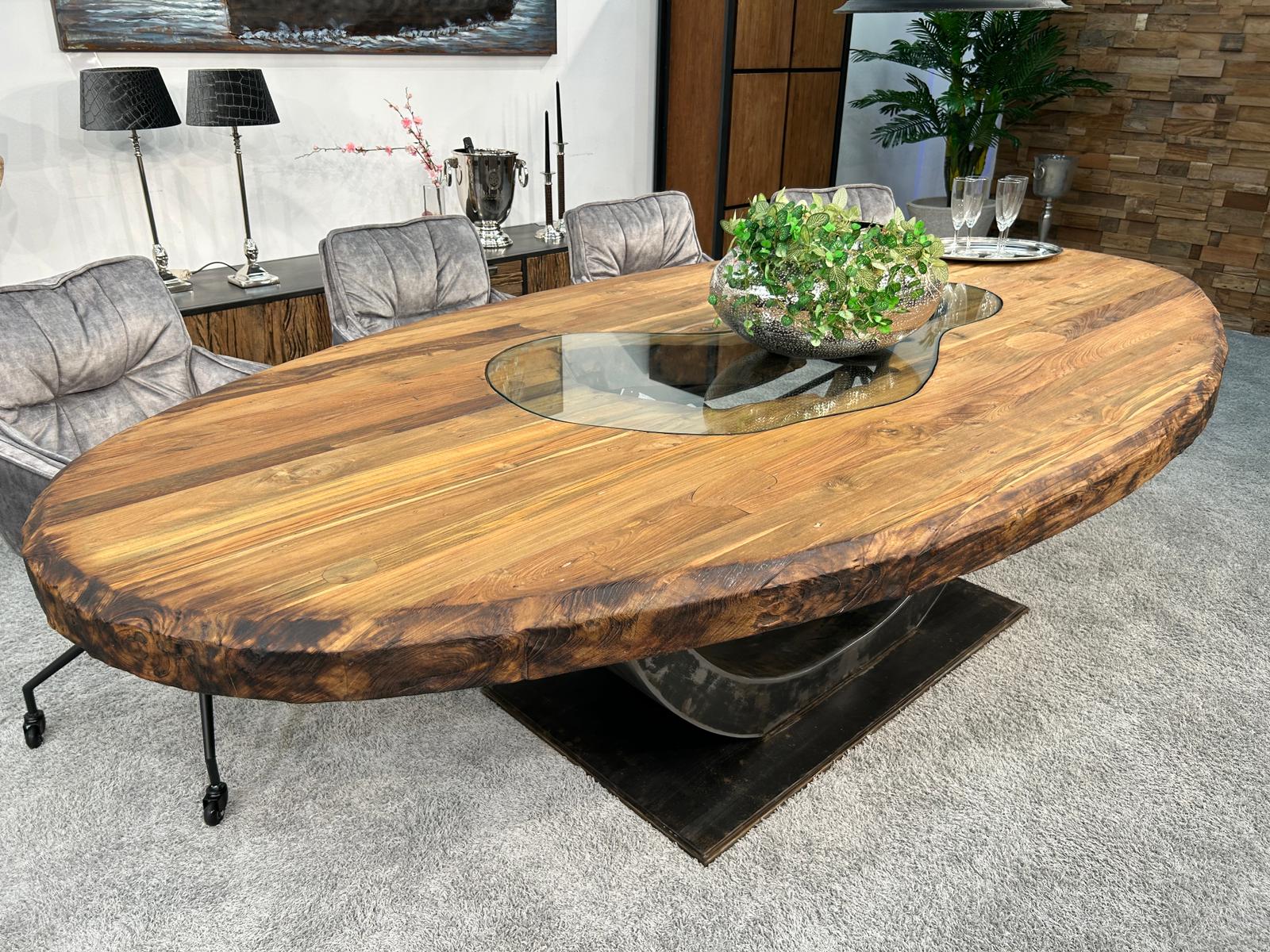
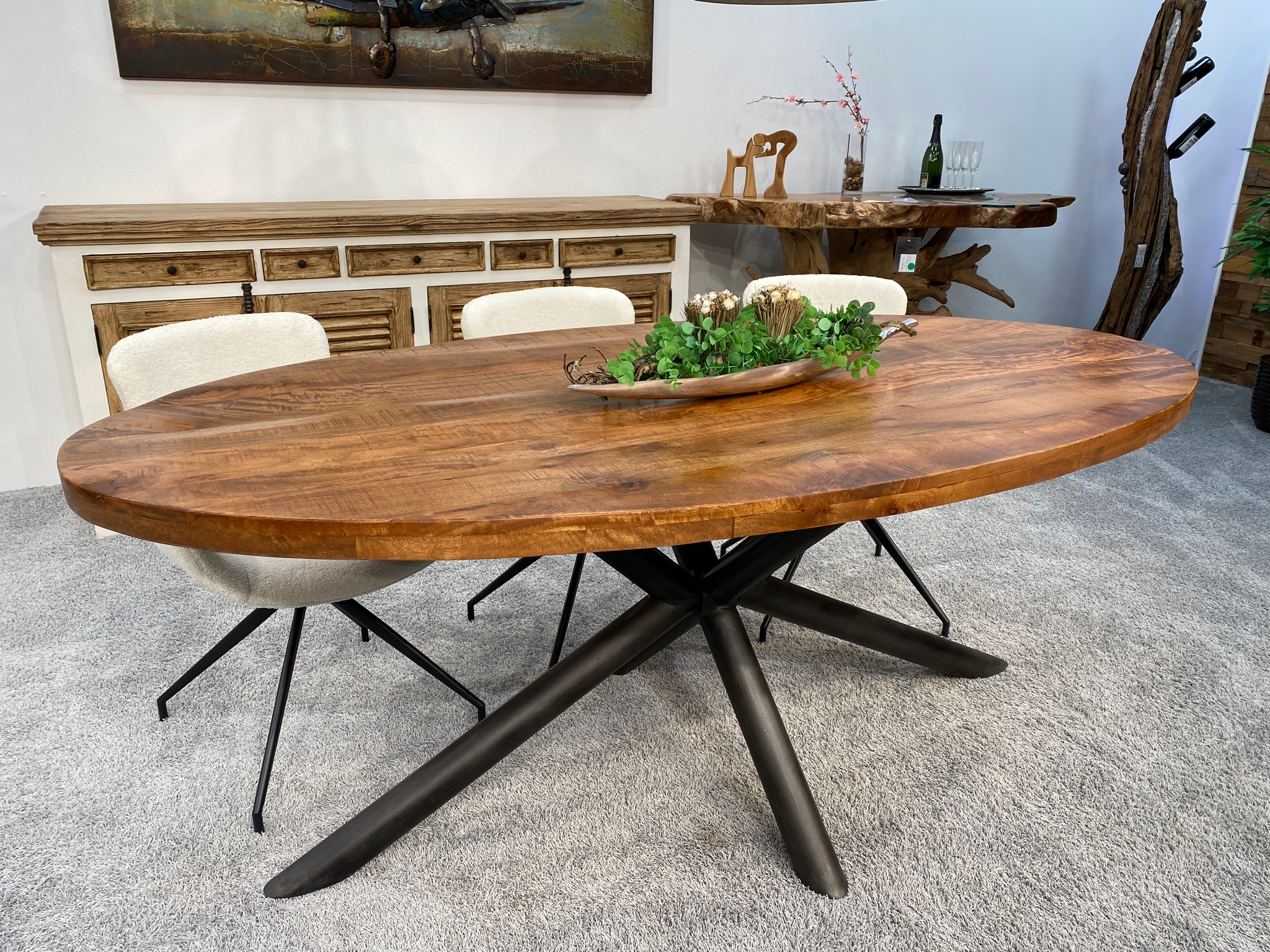
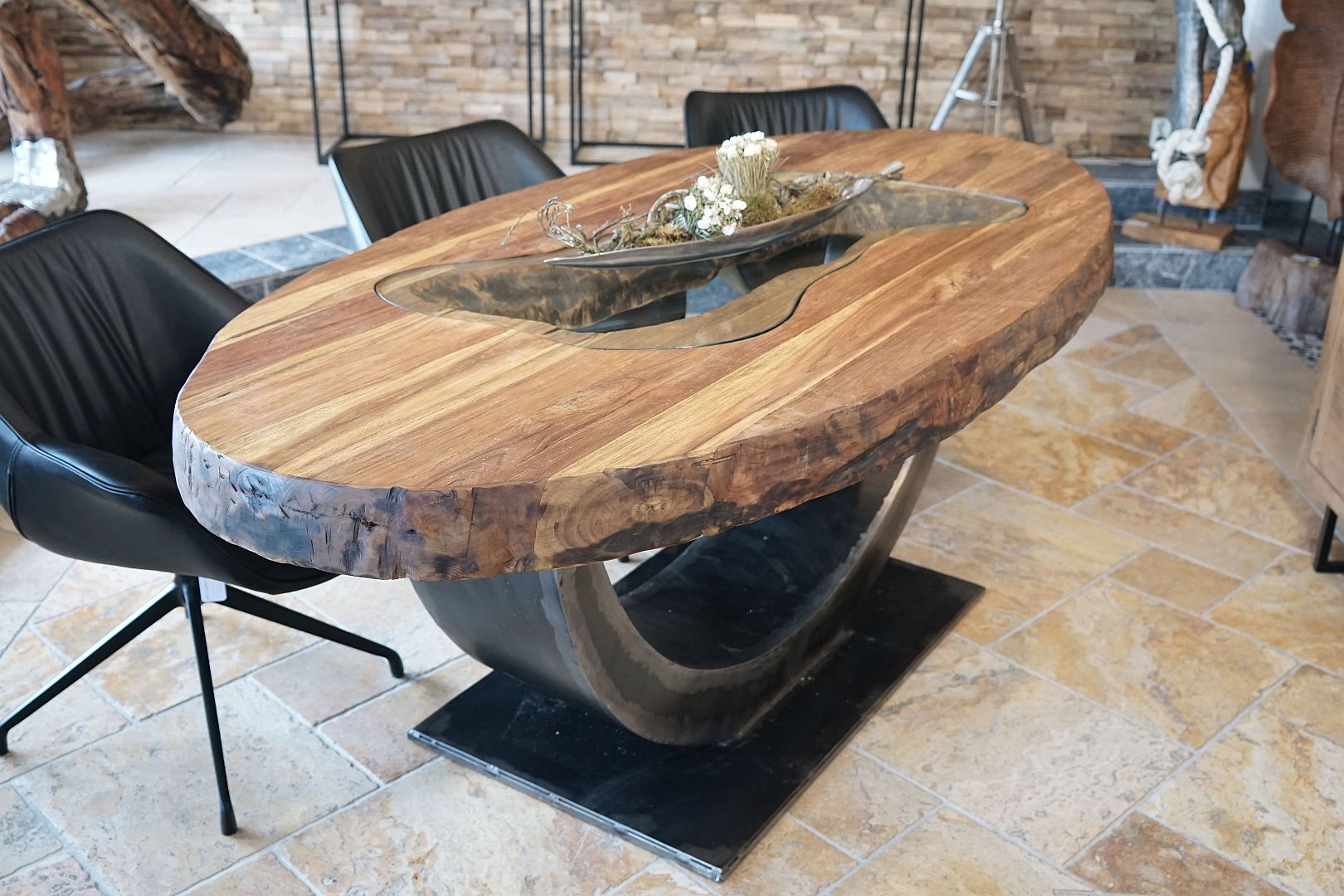
Advantages:
- Offers the same length as rectangular tables but appears less bulky due to the rounded corners.
- Promotes a harmonious atmosphere and creates more freedom of movement around the table.
- Ideal for medium to large rooms.
Disadvantages:
- Can appear bulky in smaller rooms.
- Less flexible in placement than round or rectangular models.
Seating capacity (approx. 60 – 70 cm per person):
- 180 x 90 cm: Space for 6 people.
- 240 x 100 cm: Space for 8–10 people.
- 300 x 120 cm: Space for up to 12 people.
Dining table with organic shape
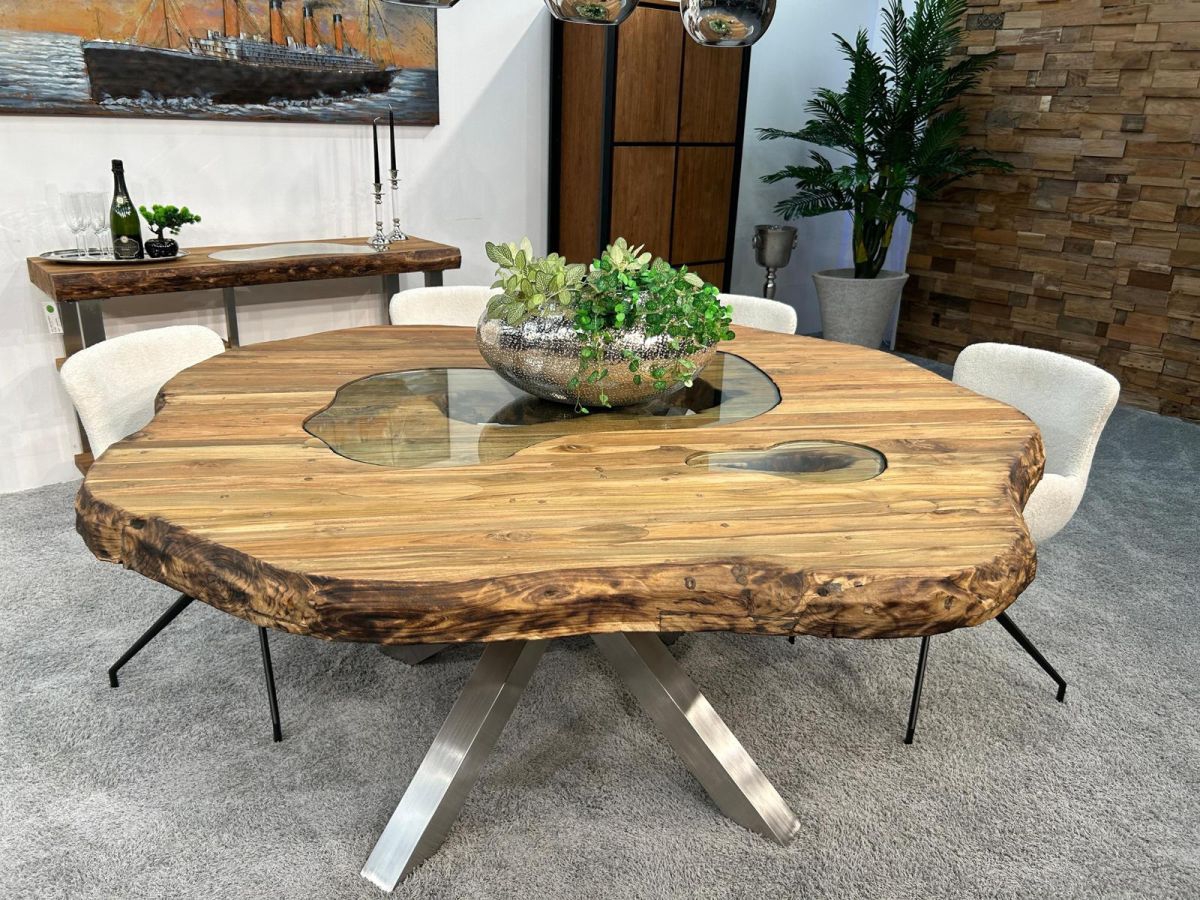
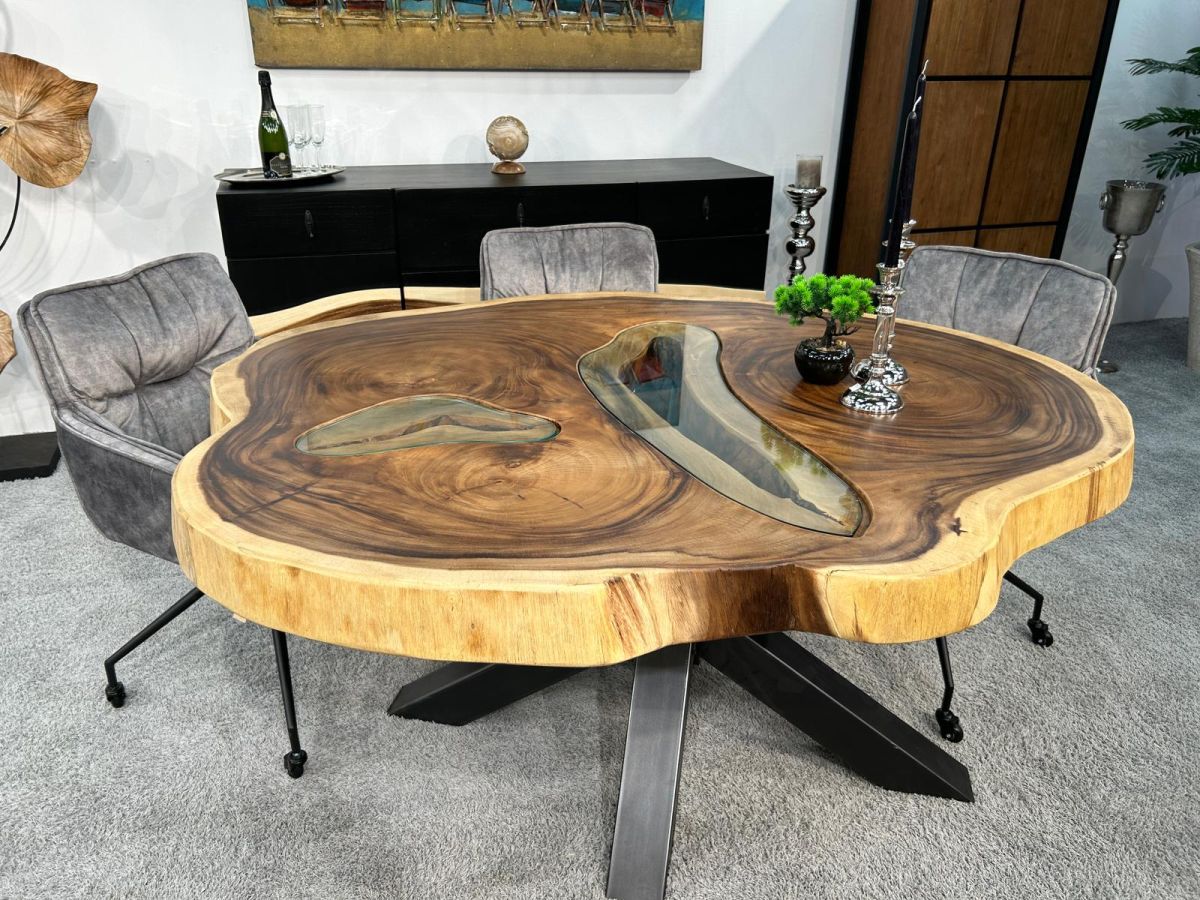
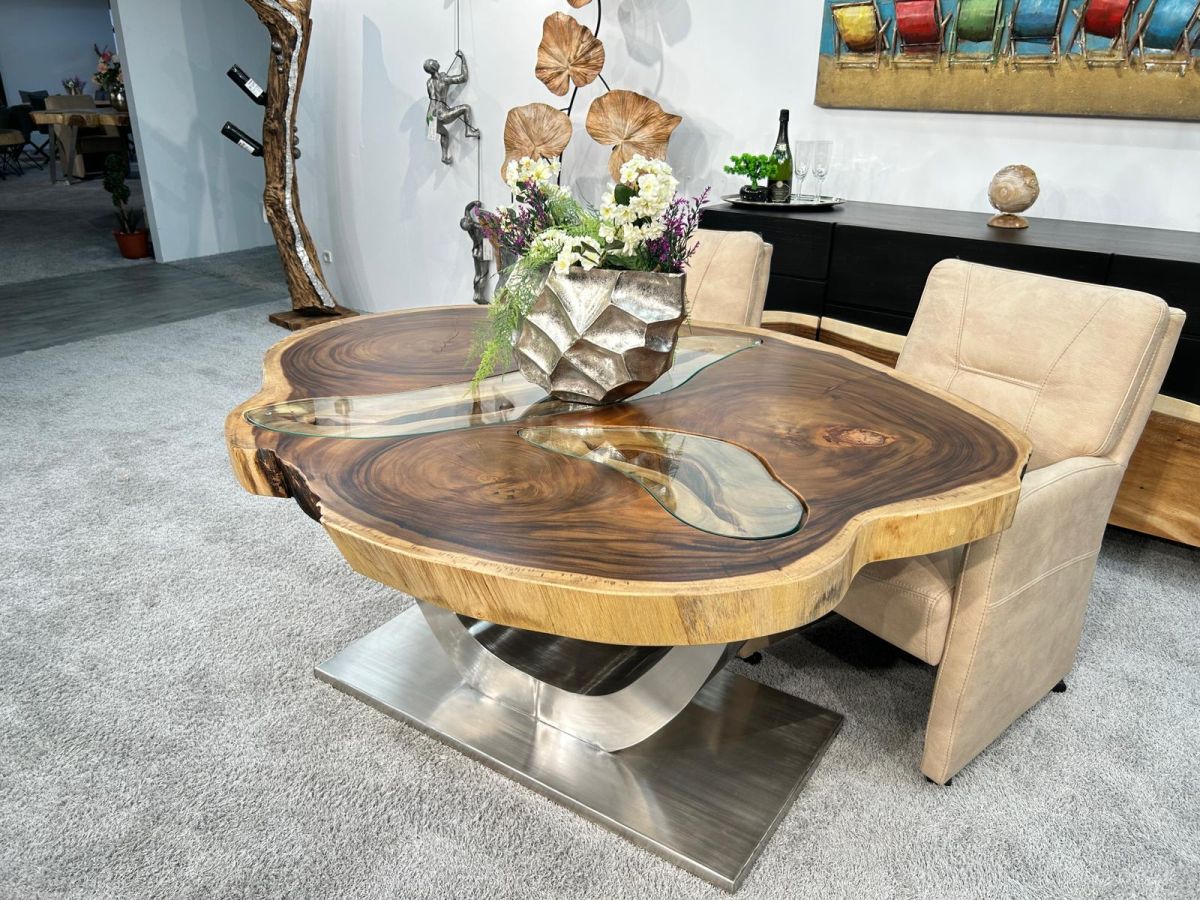
An organically shaped dining table is more than just a piece of furniture – it is a unique item that combines natural forms and exceptional design. With its flowing, irregular contour, it brings dynamism and lightness to the space. This special shape invites creative combinations and fits both modern and rustic interior styles.
The organic design allows for a natural seating arrangement and creates a relaxed atmosphere. Each table is often made from a single piece of solid wood, highlighting the unique grain and structure of the wood.
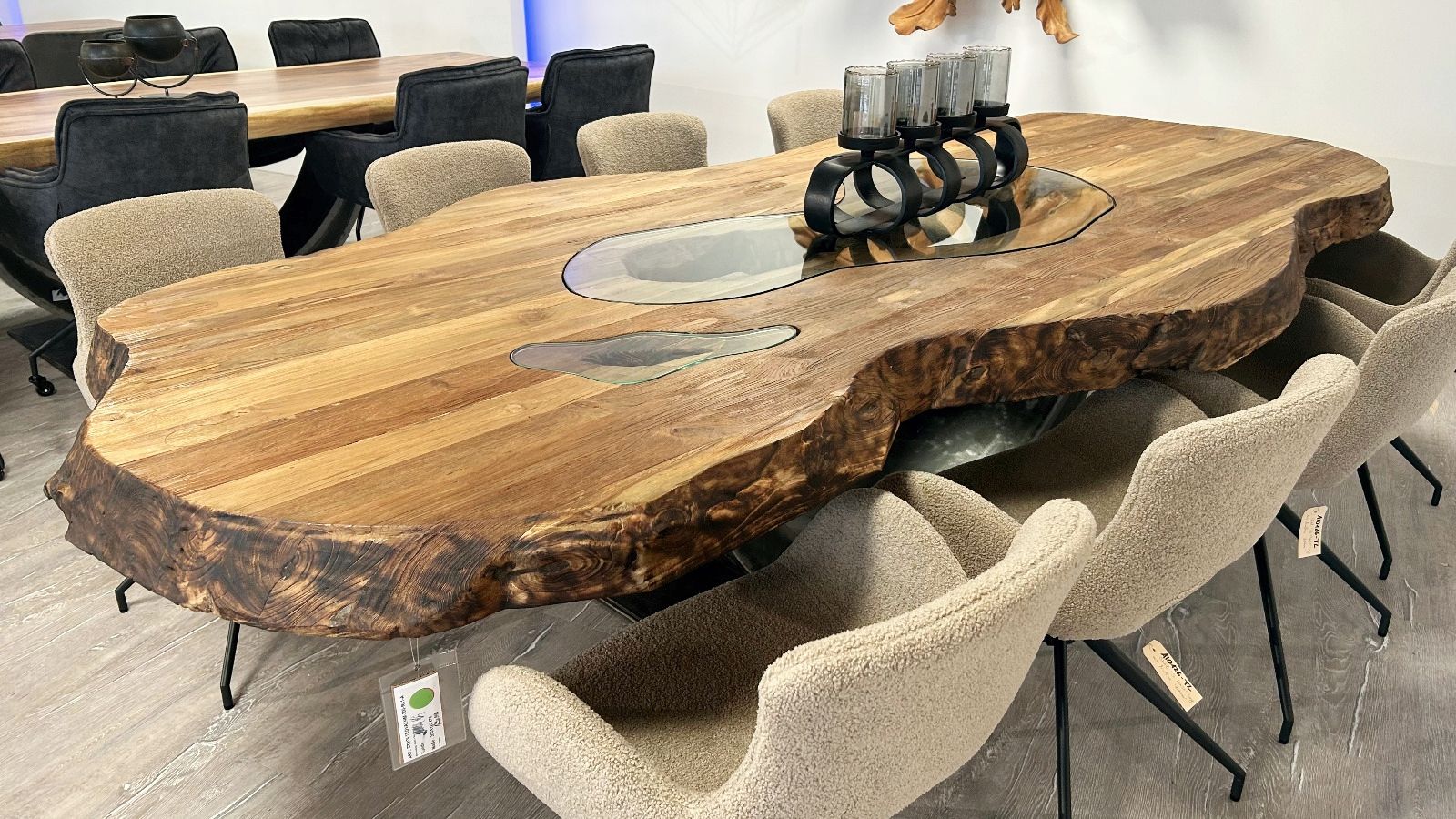

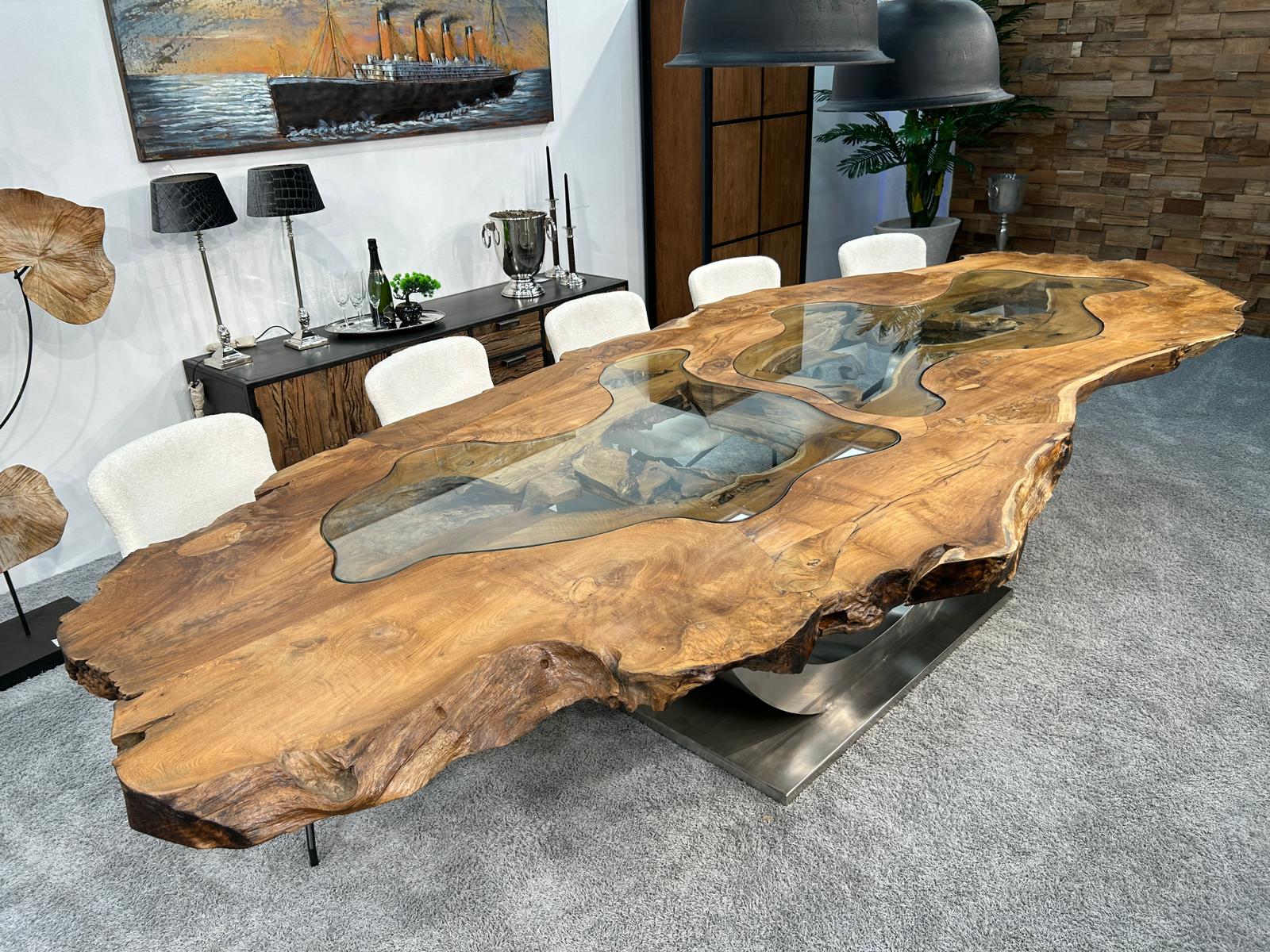
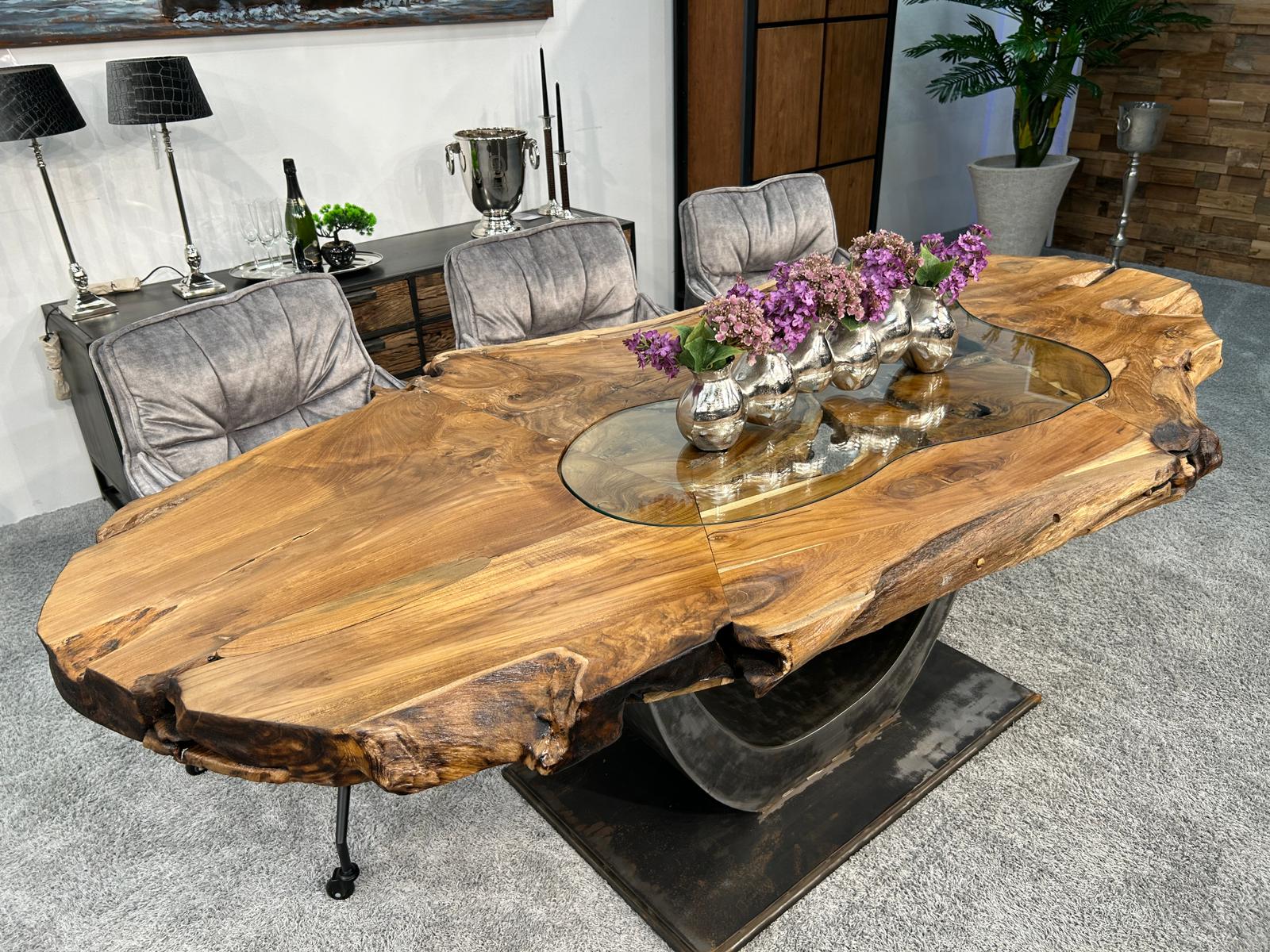
Advantages:
- Unique design that emphasizes individuality and naturalness.
- Brings dynamism and lightness to the space.
- Often handcrafted and thus a one-of-a-kind piece.
- Fits well into creative and modern living concepts.
Disadvantages:
- Less clearly defined seating places due to the irregular shape.
- Can be more difficult to place, as organic shapes often require a lot of freedom of movement.
Seating capacity (depending on the shape):
- Approx. 180 x 90 cm (similar to oval): Space for 6 people.
- Approx. 240 x 110 cm: Space for 8–10 people.
- Approx. 300 x 120 cm: Space for up to 12 people.
Which shape of a dining table suits you best ultimately depends on your taste. We hope this article has made your decision-making a little easier.
No matter which dining table shape you prefer – a high-quality dining table should always be sturdy, durable, and stylish. Find your perfect table shape in our 6,000 m² large furniture exhibition in Detern or online at tischonkel.de.
More interesting topics:
Dining table log made of solid lychee wood
Impressive dining table from GERKEN Wohndesign
The perfect dining table
Dining table series "Elements" by GERKEN Wohndesign
 Deutsch
  Nederlands
  English (UK)
  Français
  Español