

Dining tables and coffee tables compared (wood type, table frame, and glass work)
All Dining tables and coffee tables from our house are unique pieces, handcrafted in every component and individually tailored to your personal wishes upon request.
To assist you in selecting your new dining table from our house, we would like to provide you with some expertise and a comparison of the materials used in our tables on this page.
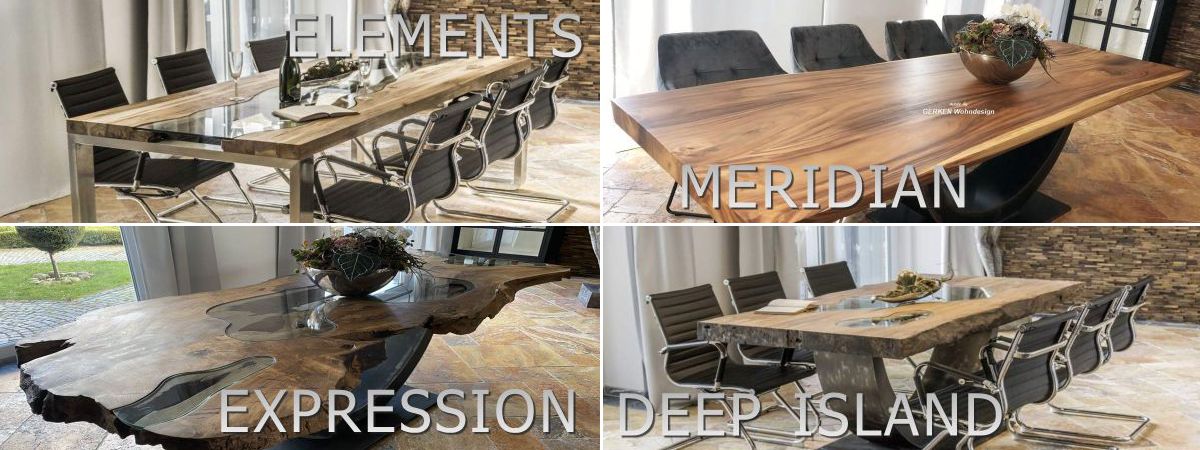
Below you can see four of our dining table models in comparison. Each of these models has differences in wood type, surface finish, and the table bases used.
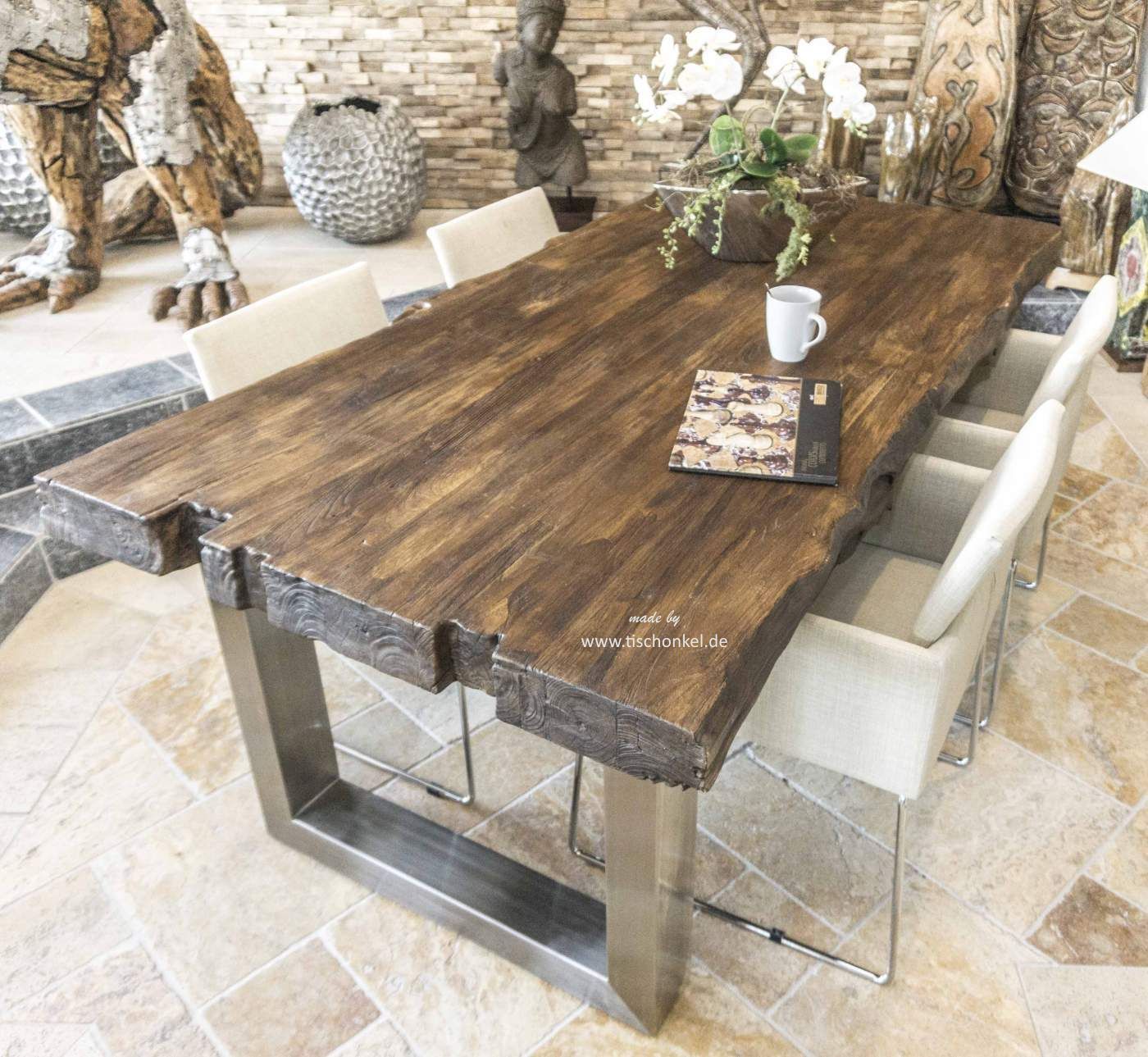
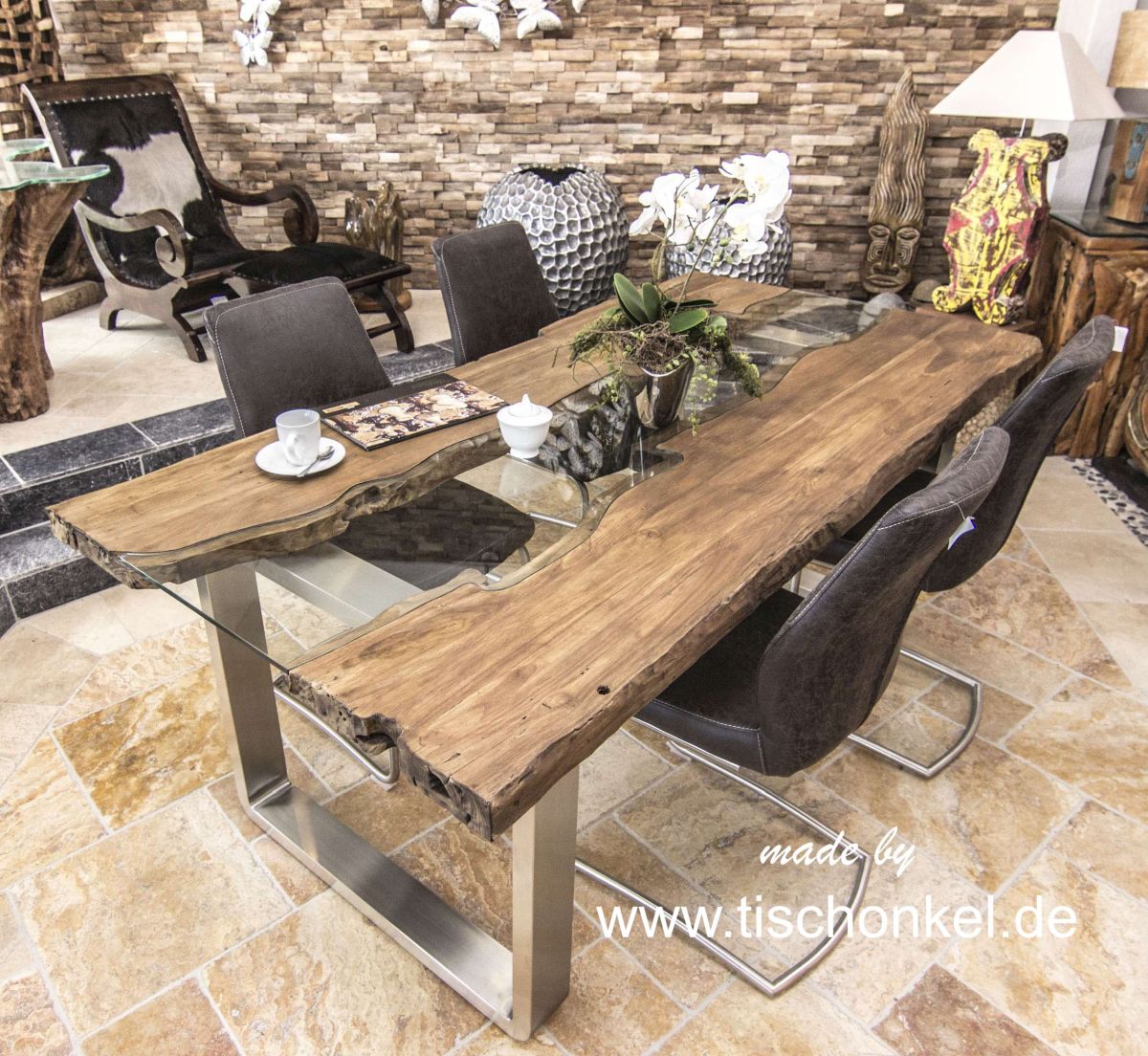
| Dining table Deep Island | Dining table Elements |
|---|---|
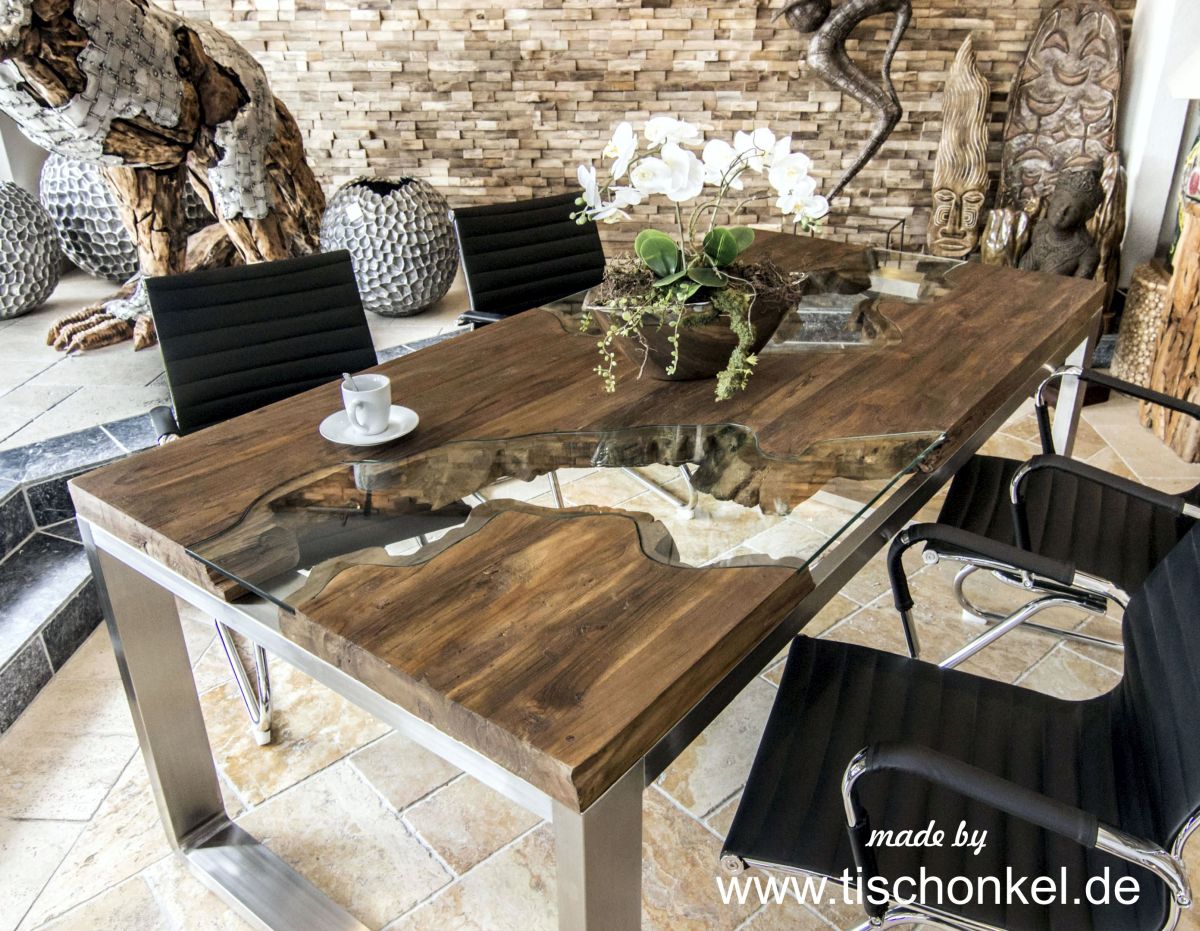
| Dining table with a tabletop made of recycled wood with a brushed surface, optionally with or without glass inlays, various table frames made of raw steel and stainless steel | Dining table with a tabletop made of recycled wood with a finely sanded surface, centrally integrated glass inlay, table frame made of brushed stainless steel |
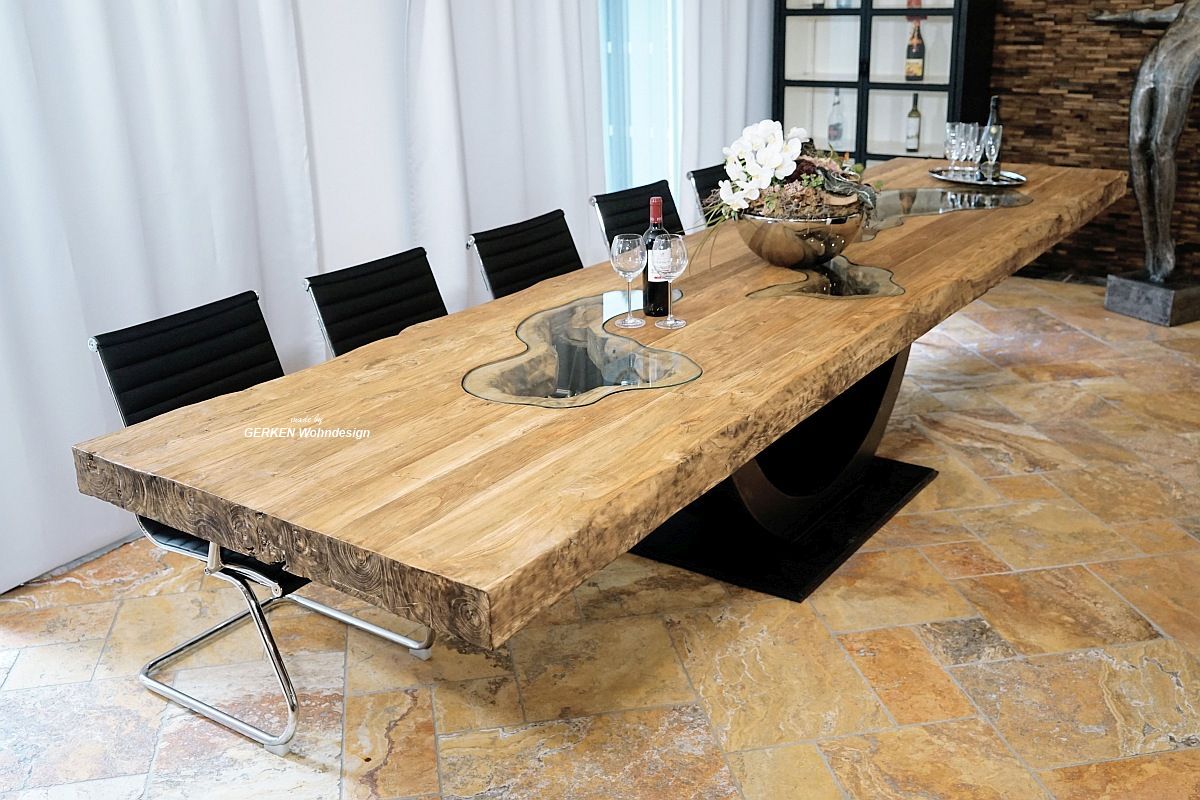
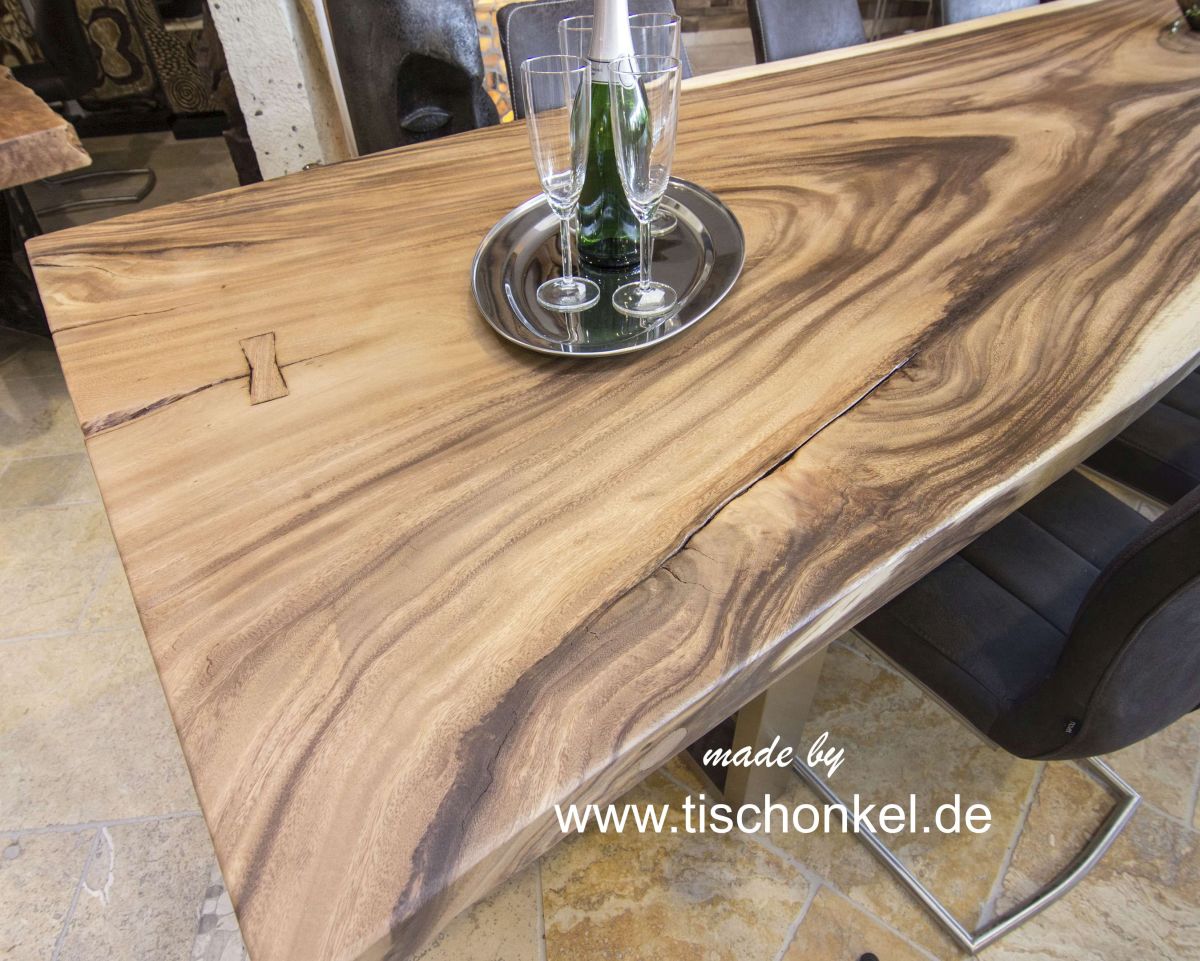
| Dining table Meridian | Dining table Expression |
|---|---|
| Dining table with a tabletop made of glued solid wood planks from Suar with a finely sanded surface, various table frames made of raw steel and stainless steel | Dining table with a tabletop made of glued tree slices (root wood) from teak wood with a finely sanded surface, table frame „half moon“ made of raw steel |
What types of wood do we use for our dining tables? An informative comparison!
The topic of sustainability is treated with the highest priority in the production of our Dining tables and Coffee tables 100%. We completely refrain from using protected wood species and limit ourselves exclusively to wood from fruit trees and recycled wood which we obtain from old houses and bridges on the islands of Java and Bali. Additionally, all woods processed by us are not used in industrial furniture manufacturing and are therefore usually processed into charcoal, which results in an additional emission of carbon dioxide (CO²) as a consequence. With every cubic meter of burned or charred wood, up to 1000 kg of CO² is released.
Essentially, we limit ourselves to the use of three wood types:
| Recycled teak wood from demolished buildings | Suar as tree slice and trunk wood | Oak as solid wood planks and trunk wood |
|---|---|---|
| Links: Wikipedia Teak (bot. Tectona Grandis) | Links: Wikipedia Suar (bot. Smanea Saman) | Links: Wikipedia Oak (bot. Quercus) |
| Technical data: Weight in fresh condition 1000kg/m³ Weight dried 550-650kg/m³ |
Technical data: Weight in fresh condition 800kg/m³ Weight dried 450-600kg/m³ |
Technical data: Weight in fresh condition 850kg/m³ Weight dried 500-600kg/m³ |
1. Dining tables and coffee tables made of recycled teak wood (bot. Tectona Grandis)
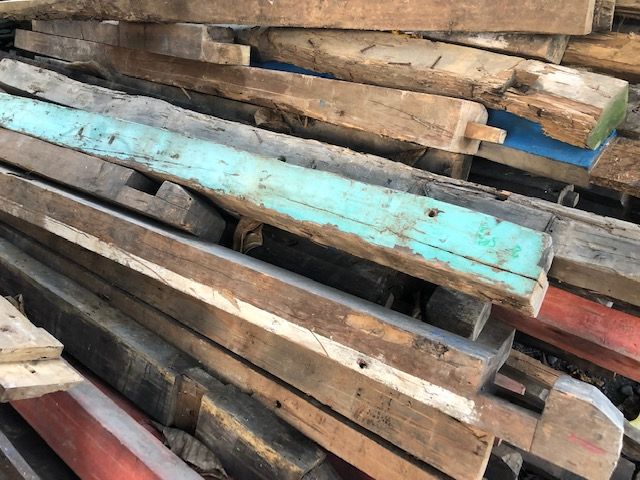
We obtain the recycled teak wood from former buildings, e.g. houses, bridges, and power poles from the islands Java and Bali in Indonesia. In comparison Compared to fresh teak wood, recycled wood is denser and stronger. Fresh teak wood typically grows on plantations designed for rapid growth. This results in the wood growing faster than old wood and thus losing strength. The teak tree was introduced in Indonesia during the Dutch colonial period as construction timber and was widely cultivated to provide a more durable alternative to the bamboo that was used until then. Today, teak wood is often grown in plantations and used as construction timber. The majority of the plantations are largely operated by the Indonesian government. Illegal logging is prohibited in Indonesia under strict penalties. Due to new cultivation methods, teak wood is now grown in shorter intervals compared to the past, which negatively affects the structure and strength of the wood. Young and quickly grown teak wood is mainly noticeable for its lighter color. Additionally, the „new“ teak wood is more susceptible to pests and other parasites.
Teak wood has been used for centuries in furniture and shipbuilding. Due to its oily wood, teak is exceptionally weather-resistant and for this reason has not been treated with preservatives. This property also makes teak wood interesting for allergy sufferers, as there are no expected emissions. Furthermore, in the manufacture of our dining tables and coffee tables, only wood from the structural framework of the buildings is used. During production, the wood is planed on all sides by up to 20 mm, removing any coatings and dirt from previous use.
If it should be a Coffee table or a Dining table made of wood, we can compare various types of wood here that can seamlessly integrate with your living space. The most popular type of wood is certainly our recycled teak wood (old wood). Recycled wood has a unique surface developed over decades, making each tabletop a special feature. The holes created during the lengthy processing and use, such as from nails or joints, have been artistically filled by our carpenters with wood and incorporated into the tabletops. Each coffee table made of wood (recycled wood) is thus a unique piece in its structure and quality.
Our formats range from the small coffee table to the large coffee table for the large living room. We also offer you various shapes. If you prefer a rectangular coffee table you will find it just as easily in our Online shop as a round coffee table.
2. Dining tables and coffee tables made of Suar (bot. Samanea Saman)
The Suar originally comes from South America, primarily its distribution area extends from Bolivia, Brazil, Mexico, and Peru. In Venezuela and Colombia, the Suar has its strongest distribution.
Other common names for Suar include Monkey Pod, Asian oak, Trembesi, and Maeh.
In the 18th and 19th centuries, the Suar was introduced by colonial powers from Britain, France, Portugal, Spain, and the Netherlands in areas around Florida, Hawaii, in tropical and subtropical regions in Asia and Africa, as well as in areas in India, Burma, the Philippines, and Indonesia, where it spread rapidly due to its reproductive capabilities.
The Suar is a species of acacia and botanically belongs to the legume family of the Mimosa family. The pods fall to the ground during ripening, where they are eaten by animals. The seed of the fruit is excreted elsewhere undigested, which rapidly accelerated the spread of the tree in its native areas.
1. The Suar forms a very large shallow root in humid regions and damages adjacent buildings after just a few years, penetrating road surfaces and sidewalks. Due to its high water absorption, the tree has very rapid growth, which often leads to problems in inhabited areas. At an age of 40–60 years, the main trunk can have a diameter of up to 100 cm. For these reasons, the supply of raw material is quite easily ensured. In Indonesia, from where we source our Suar slices, the extraction is monitored by authorities. Between Indonesia and the European Union, there is the FLEGT Agreement, 2. , which prevents illegal logging. Every piece of wood from Indonesia must be accompanied by an official document, the SVLK or the FLEGT document, which is then verified for authenticity by the Federal Office for Agriculture and Food before arriving in Germany. Unfortunately, Indonesia is one of the few countries that has voluntarily committed to the FLEGT Agreement 3. . In most countries, whose woods are also available on the German market, logging and the replanting of trees are unfortunately not monitored, causing immeasurable damage to nature in some areas.
4. At Gerken Living Design, a Tree trunk coffee table 5. to the Design coffee table6. ! Every tree trunk has its peculiarities,…whether it’s the shape, the wood grain, or the wood color,…and here too, nature has its own rules. The naturally grown tree slices often have holes and distortions, which we do not remove but instead embellish with artistically cut glass plates. A coffee table made from a tree trunk is something very special. Here, nature alone decides on the design,…we can only refine the design of the coffee tables.
7. Making a direct comparison between the types of wood Teak, Suar, and Oak is difficult. All the types of wood used are suitable for the construction of our furniture and have been tested over many decades. Generally, it’s only about personal taste here,…and even that is not comparable. For dining tables and coffee tables with a rather rustic surface, recycled teak wood is usually better expressed, as the traces of previous use, such as nail holes or joints, are worked over with other pieces of wood. Those who prefer a dining table with the appearance of a single tree trunk often choose a tree trunk table made of Suar. The Suar is a very fast-growing fruit tree and is not one of the protected tree species. The oak table, on the other hand, is the most common dining table in Europe. It appears rather simple and elegant but loses its uniqueness due to its already global distribution. Therefore, we will not go into the properties of oak dining tables in this coffee table and dining table comparison.
8. What other materials are used for coffee tables and dining tables?
9. As already described above, we exclusively use reclaimed wood, recycled wood, and the trunk wood of fruit trees. All tables are handcrafted, making each individual table a unique piece for your personal living style. To offer you such design coffee tables, we work with small family businesses on the islands of Java and Bali. Each of these businesses has its own technique for implementing our ideas, thus making each table 10. unique. The differences in the processing of the wood can also be discovered in the item images upon closer inspection.
11. 1. Table frames for coffee tables and dining tables made of metal
12. For many tables from our company, we also offer various design options. Not everyone has stainless steel integrated into their living style, or perhaps they just have a different taste, so we also offer table legs and table frames made of raw steel in Industrial design 13. vintage design 14. . For all coffee tables considered for this, you will find a selection of the available table frames in the item description. 15. The stainless steel we use is designed for living areas. Like all other components of our living room tables, the table frames made of stainless steel are handcrafted. The same applies to the table frames made of raw steel, which are elaborately provided with an industrial design. The finished table frame is coated with a clear lacquer after production to avoid corrosion.
16. 2. Table tops with glass inlays.
17. Please note that we do not work out and repair naturally occurring holes and growths in the living room and dining tables made from a tree trunk, but instead provide them with elaborately cut glass plates or glass inlays. However, some living room tables would be too elaborate to be processed in this technique. Especially for living room tables made from a tree root, a full-surface glass plate is therefore used. The glass plates usually have a uniform thickness of 10 mm, thus providing additional stability to your coffee table. See for yourself, as even a coffee table with a glass plate (glass table) can be a very beautiful eye-catcher in your living room.
18. 3. Coffee tables made from tree roots.
19. A coffee table made from a tree root is particularly sustainable. The used tree roots come from the original areas of uncontrolled logging, when garden furniture made of teak was still in fashion a few years ago. Today, the tree roots are extracted from the ground to give new trees space to grow, as teak hardly weathers due to its oily structure. The tree roots are carefully dried and handcrafted into shape, sanded, and coated with a water-based furniture lacquer. In some coffee tables made from a tree root, the wild area inside the root is bleached, and the outer cut edges are left in their natural wood color. This type of processing is the reason for the beautiful 3D appearance of the tree root.
Particularly sustainable is a coffee table made from a tree root.
Dining tables and coffee tables compared to other providers
A large part of our tables is produced exclusively for our own needs. The design comes from our house, and we want these incomparable qualities to remain exclusive to us.
Likewise, we never supply the retail trade or other purchasing associations in the furniture industry to continue offering our furniture as something truly special. This may not be wise from a commercial perspective, yet we love our work and always enjoy the indescribably beautiful reactions of our rather limited clientele.
Comparison: Handcrafted or industrial product
Every table from our house is made entirely by hand. Each individual board, each solid wood beam, is hand-selected and shaped into a table by extremely skilled craftsmen. This not only makes our dining tables and coffee tables special, but it also ensures that each individual table is a unique piece and, compared to an industrially manufactured dining table or coffee table, a piece of craftsmanship.
Let's take the example of tables made from recycled wood. All these tables are produced by small family businesses from Java and Bali, exclusively for the own needs of GERKEN Wohndesign. Currently (as of June 2022), over 70 employees work in these businesses,… and each of these employees supports a family with their craft. So, especially with the tables made from recycled wood, the topic of sustainability plays a significant role, and it is also the responsibility towards 70 families whose livelihoods are secured by our work.
With our work, we thus preserve the old professions that are highly endangered by industrialization.
Comparison: Recycled wood or fresh wood
At this point, we certainly do not need to justify why we manufacture our tables from recycled wood. It is sustainability that represents one of the two most important reasons for our work compared to fresh wood.
Recycled wood is particularly valuable not only because of its extremely strong wood structure. It is rather the opportunity to use a material that has already had a long lifespan as a residential house, as a bridge, or as a power pole. The used wooden beams are often between 70 and 100 years old. Currently, it is already difficult to obtain recycled wood, but it is not impossible yet. Unfortunately, the decreased availability affects the purchase price, which is now twice as high compared to the price of freshly cut wood.
Tischonkel.de, the online shop for extraordinary furniture!
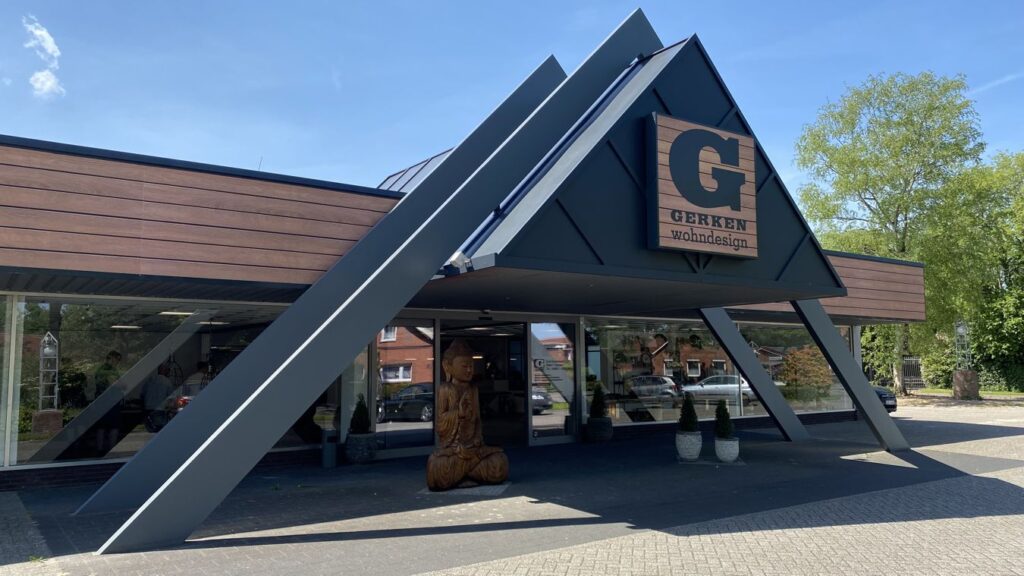
Are you interested in our extraordinary furnishing ideas, or perhaps in the model series shown here? Then feel free to check out our online shop „Der Tischonkel“, or visit us in our 6000 sqm large furniture exhibition in East Frisia Detern.
More interesting topics:
Best online shop for dining tables
Round dining table made of wood "Natural Eternia"
The dining table online shop
Dining tables: Prefer round or rectangular?
 German
  English