

- You do not have any products in your shopping cart yet.


Dining Table "Natural Eternia" made of Teak Wood with Glass Inlay, approx. 194 x 180 x 79 cm


NEW
Dining Table "Natural Eternia" made of Teak Wood with Glass Inlay, approx. 194 x 180 x 79 cm
The dining table „Natural Eternia“ combines high-quality materials into an extraordinary designer piece that perfectly blends natural warmth and modern elegance. The solid tabletop consists of carefully glued reclaimed teak wood planks, which have been hand-brushed and waxed. Each plank carries its own story in the form of distinctive textures, natural signs of use, and a unique grain – making every table a one-of-a-kind original.
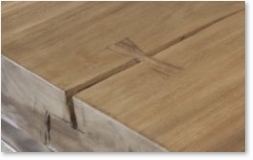
A special highlight is the milled-in glass element with a thickness of 10 mm, creating an exciting material mix and adding depth to the design. The sturdy, approx. 8 cm thick tabletop is supported by a stable and modern stainless steel frame, which forms a stylish contrast to the warm reclaimed wood and gives the table its elegant, timeless appearance.
Whether in the dining area, spacious living room, or modern loft – the dining table „Natural Eternia“ quickly becomes the centerpiece of any interior.
Dimensions:
-
Format: approx. 194 x 180 x 79 cm
-
Top thickness: approx. 8 cm
-
Glass thickness: 10 mm
Materials:
-
Reclaimed wood Teak, hand-brushed and waxed
-
Milled-in glass
-
Stainless steel frame
Special features:
-
High-quality craftsmanship from sustainable reclaimed wood
-
Handcrafted for a unique surface texture
-
Modern design through a material mix of wood, glass, and stainless steel
-
Solid, high-quality, and durable
Example: Dining Table "Eternia" made of reclaimed wood with a diameter of 140 cm
The reclaimed wood used comes from demolished houses and bridges on the islands of Java and Bali. The individual components are prefabricated in a small family business and then brushed, waxed, and assembled in our in-house workshop.
Manufacturer Information and Sustainability
Manufacturer name:
GERKEN Wohndesign GmbH
Address:
Zum Krummwall 1-3
26847 Detern
Germany
Contact information:
Phone: +49 (0) 4954 9287800
E-Mail: anfrage@tischonkel.de
Website: www.tischonkel.de
Place of manufacture:
Handcrafted in Indonesia
Sustainability:
The wood for this table comes from recycled materials and meets the highest standards of environmentally friendly furniture production.
Care Instructions for Your Solid Wood Table – How to Keep It Beautiful for Life
A solid wood table is not an off-the-shelf piece of furniture. It is a piece of nature that comes to your home – and that is why it needs special attention. Here we explain in detail and step by step how to care for your table, position it correctly, and protect it long-term from damage such as cracks, warping, or stains.
The following instructions apply to waxed, oiled, sealed (e.g., Teak-Shield) and lacquered surfaces. Because these surfaces have different structures, it is important to know how to treat each table optimally.
Why does solid wood need care at all?
How does wood react in your home?
Solid wood is alive – even after processing. This means: It absorbs moisture, releases it, and reacts to temperature fluctuations. This is what gives the material its beauty but can cause problems in the wrong environment.
Wood is particularly sensitive to:
- too dry air
- too high or direct heat
- strong temperature fluctuations
- intense sunlight
You might know it from grandma's old wooden doors: In summer they stuck, in winter they closed more easily. This basic principle also applies to your solid wood table, just in a more elegant form.
What values are ideal for your indoor climate?
To keep your table stable over time, we recommend a balanced indoor climate:
- Room temperature: approximately 18–22 °C
- Humidity: approximately 45–60 %
Within this range, the wood will continue to work but within a normal, non-critical scope. Anything significantly warmer, colder, or drier causes unnecessary stress to the wood.
How do you properly care for oiled, waxed, or sealed surfaces?
What does an "open-pored" surface mean for your daily life?
Oiled, waxed, or sealed surfaces are open-pored. This means:
- The wood can continue to absorb and release moisture.
- The surface feels warm, natural, and lively.
- Small damages can often be repaired by yourself with proper care.
This openness is exactly why you need to be a bit more attentive with care than with a fully sealed lacquer surface.
How do you clean oiled or waxed surfaces daily?
Daily and regular cleaning is uncomplicated if you follow a few basic rules:
- Wipe the table with a soft cotton cloth.
- Use a slightly damp, never dripping wet cloth.
- Remove dust regularly to prevent fine scratches from dirt particles.
- Immediately absorb spilled liquids to prevent penetration into the wood.
- Do not use caustic or acidic cleaners.
Which cleaners should you definitely avoid?
- Microfiber cloths with coarse, abrasive texture
- Abrasive cleaners and scouring pads
- Glass cleaners or cleaners with alcohol
- Cleaners with solvents or strong surfactants
- "All-purpose cleaners" that strongly degrease fats and oils
How often do you need to re-treat – and how do you proceed?
Depending on use, we recommend re-oiling or re-waxing your table every 6–18 months. If the table is used intensively (e.g., as a family dining table), a shorter interval may be advisable.
Here is the ideal procedure for aftercare:
- Thoroughly clean the tabletop from dust and dirt and let it dry completely.
- Apply a suitable wood oil or furniture wax thinly and evenly with a soft cloth.
- Let the care product penetrate for a few minutes.
- Carefully remove excess oil or wax with a fresh cotton cloth.
- Let the surface dry well for several hours, ideally overnight.
How do you properly care for a lacquered solid wood table?
A lacquered surface is very easy to care for in daily life if you observe these points:
- Use a soft, slightly damp cloth for cleaning.
- Wipe afterwards with a dry cloth to avoid water spots.
- Avoid harsh cleaning agents, solvents, or abrasive products.
What should you consider with a lacquered table?
Lacquer offers good protection – but not against everything. Especially keep the following points in mind:
- Never place hot pots, pans, or casserole dishes on the table without coasters.
- Do not drag heavy or rough objects across the surface; lift them instead.
- Always use a cutting board when cutting.
What is the ideal location for your solid wood table?
Where should your table definitely not be placed?
Your new table prefers a somewhat calmer environment. A new setting can stress the wood – especially if there are temperature differences on and within the solid wood top. In all these places, the wood is exposed to strong climate fluctuations:
- Direct sunlight: Heats the surface strongly, dries it out, and can promote cracking (e.g., conservatories, south-facing side).
- Fireplaces and radiators: Cause uneven heating and dryness. Uneven tensions often lead to cracks.
- Underfloor heating: Allows very warm air to rise directly to the underside and creates tensions that can cause cracks.
- Dry winter air: Removes moisture and causes wood shrinkage.
What to do if something does happen?
The wood used for our tables has been carefully dried and seasoned. Usually, nothing will happen, but the above conditions can cause problems.
Why are such damages not covered by warranty?
Such damages are not caused by a product defect but by environmental influences that we as manufacturer or retailer cannot control. The wood simply reacts naturally to unnatural conditions.
Therefore, cracks caused by incorrect indoor climate, heat, dryness, or extreme location conditions are not considered warranty cases.
How to best protect your table permanently?
- Maintain humidity in the range of 45–60 %.
- Avoid direct sunlight on the tabletop.
- Do not place the table directly next to fireplaces, stoves, or strong radiators.
- Avoid using underfloor heating under your table.
- Use coasters, placemats, and felt gliders in daily use.
- Care for the surface regularly with suitable products.
You are not alone!
Even with the best care, wood remains a natural product. If you discover cracks, stains, or other damages, just contact us. We will help you with recommendations for care products, repair kits, and tips on location. This way, you will enjoy your solid wood table for a long time – whether waxed, oiled, or lacquered.